
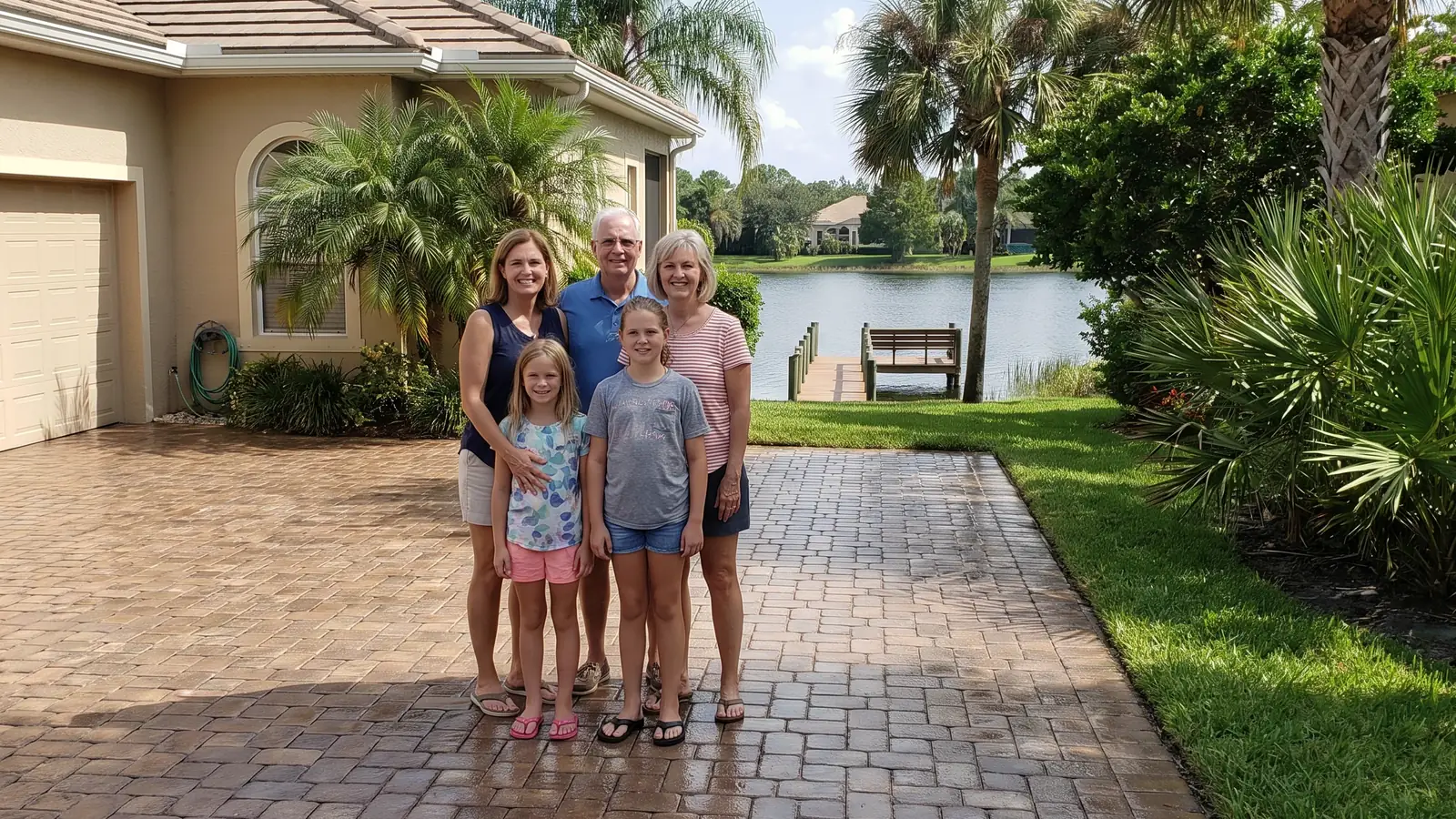
Paver sealing for Downtown St. Petersburg homes
Paver Sealing in Downtown St. Petersburg, FL
Courtyards, pool decks and patios in downtown St. Petersburg get a free sealing estimate when you call (727) 591-3365.
- Brings out deeper paver color
- Fresh joint sand helps lock pavers in place
- Gives weeds less room to grow
- Makes the surface easier to keep clean
- Free estimate, no obligation
Request a Free Estimate
Free, no obligation.
Fast, careful paver sealing in Downtown St. Petersburg
Paver sealing is available in downtown St. Petersburg for townhome patios, courtyards, pool decks and driveways. The contractor you hire cleans the pavers, refills the joints and seals them, and looking at your space is free. Call (727) 591-3365, and an answer arrives inside 1 business day, often within hours. Pavers downtown face sun, shade between buildings and summer rain.
Picture a courtyard gone chalky and gray, with weeds poking up between the pavers. Wash it, fill the joints and add a coat, and the stone reads as one steady color again. If you look after a shared space, you can request a free estimate and take the written price to your board. The estimate is free.
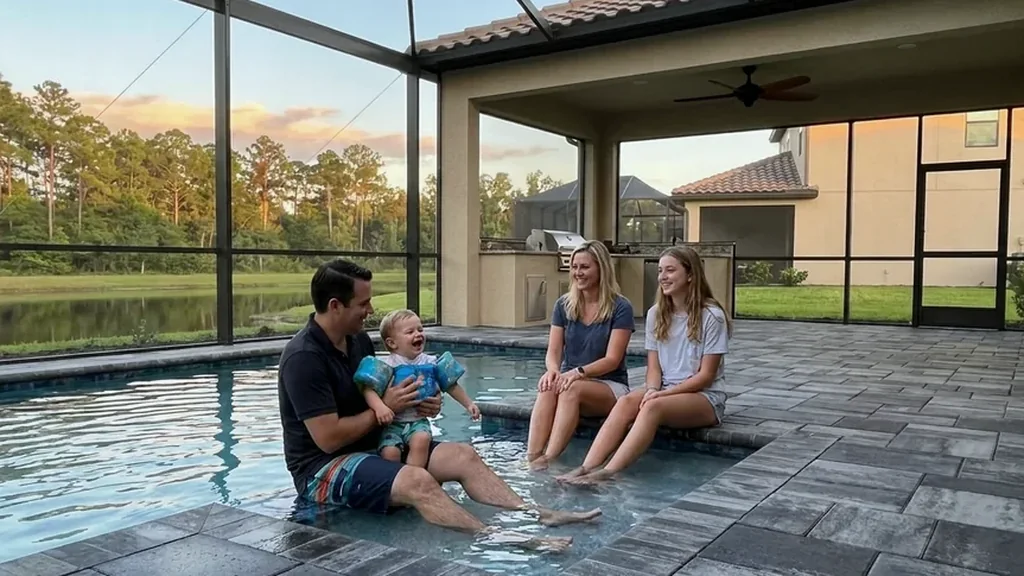
Why hire a local paver sealing contractor in Downtown St. Petersburg?
Downtown St. Petersburg is mostly condos, apartments and townhomes, so pavers often belong to a shared courtyard or deck. A local contractor can quote for a board or for one owner, and you can request a free estimate to start. Downtown St. Petersburg pavers deserve a plan made for their conditions.
A free look at your space
A local contractor looks over your courtyard, deck or drive at no charge and puts the price in writing.
A range to hold bids against
Published Tampa Bay prices run $1.25 to $2.50 per square foot for the wash, sand and sealer. Measure each bid against that.
A finish that suits the block
Matte stays calm beside older brick and stone, while a wet look brings more shine and shows scuffs sooner.
Your board or you decide
You pick the date, the finish and whether to go ahead. Asking for an estimate downtown binds nobody to anything.
Get Your Free Estimate in Downtown St. Petersburg
Tell us about your pavers in Downtown St. Petersburg.
Free, no obligation
What paver problems show up most in Downtown St. Petersburg?
Sun that fades open courtyards
St. Petersburg averages 361 days of sunshine a year, according to Wikipedia. That is a lot of sun on a courtyard or pool deck with no roof over it. Unsealed pavers lose color and look washed out, and pool decks and entry courts show it first because nothing shades them. A courtyard of decorative stone may look fine for years and then fade in a single summer, and the longer you wait, the more cleaning it takes to bring the tone back. A fresh coat helps hold the color you chose. Photos of each area help owners compare notes before the board meets, and they give the contractor a clear picture of the shade patterns downtown St. Petersburg buildings create.
Damp shade between tall buildings
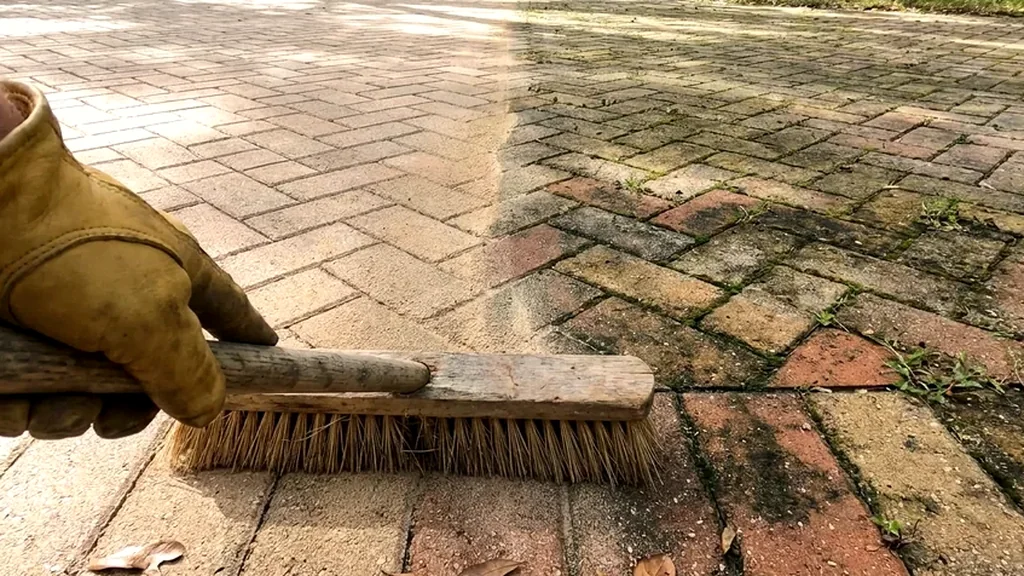
Downtown has many multi-family buildings, and their walls throw long shadows on the ground. Landscape guidance says moss and algae show up on pavers that stay heavily shaded and damp. A north-facing courtyard can turn green while the driveway across the street stays clean. The film gathers soil and leaf litter, which keeps the surface wetter still, and slick pavers by a pool door are the kind of thing a contractor flags at the estimate. A coat makes the stone easier to rinse between washes.
Joint sand washed out by summer rain
The rainy season runs June through September, and the city gets about 52 inches of rain a year. Downtown is built out, so there is little loose ground for rain to soak into, and water runs across the pavers. Heavy rain pulls sand from the joints. Open seams invite soil, and weeds follow close behind. After a storm, a look at the seams near drains and downspouts shows how much sand has gone, and a top-up before the coat settles the question.
An old coat nobody remembers
With about three in five homes rented, a paved area may have been sealed by a past owner, a past manager or a past vendor. Nobody may know which product went down. The product type matters here, because a water-based sealer cannot be put over a solvent-based coat. A short chat with a property manager can turn up an old invoice or a product name. If nothing can be traced, the contractor tests how the surface takes a small patch.
Heavy use at shared entries
Pool decks, entry courts and guest parking see more feet and wheels than a single-family driveway. Scuffs and dull patches show up where people walk and turn, and chairs, carts and rolling bags all leave marks that a coat can hide. A wet look shows scuffs sooner than matte, so busy spaces often suit matte, while a quiet courtyard where color matters more can carry a wet look. Many downtown St. Petersburg residents walk these areas every day, so the surface matters.
Is paver sealing different in the historic blocks than in newer buildings?
Yes, because the older blocks come with extra rules and extra care. The Downtown St. Petersburg Historic District was listed on the National Register on April 30, 2004. It covers 420 acres and holds 367 historic buildings, bounded by 5th Avenue North, Beach Drive Northeast, Central Avenue and 9th Street North. If your patio sits inside those lines, say so when you request a free estimate.
Inside a local historic district, the city's Certificate of Appropriateness applies to property that is designated or sits in the district. The city describes a faster review path for certain restoration projects, and its page does not name sealing. A short question to city staff before you change the look of a front walk is cheap insurance. To say which block you live on, call (727) 591-3365.
Outside the historic lines, ZIP 33701 had 19,137 residents at the 2020 Census, and about three in four homes are in multi-family buildings. Only about 23 percent are single-family houses. That mix means many pavers belong to a courtyard, a pool deck or a townhome row. To get one price for several areas, request a free estimate.
Pinellas County is the most densely populated county in Florida and is mostly built out, with little developable land left. Downtown shows it, with walks, courtyards and pool decks close to neighbors and to the street. That makes tidy staging part of the job, from where hoses run to where the rinse water goes. Ask how the contractor would handle your site when you request a free estimate.
What does paver sealing cost in Downtown St. Petersburg?
Tampa Bay companies commonly publish a range of $1.25 to $2.50 per square foot for cleaning, sanding and sealing. A courtyard with many edges and planters takes more hand work than a plain driveway. Old sealer that needs attention first can also move the total. For a number on the pavers you have, request a free estimate.
Shared spaces add steps. A board may want a written scope, start and end dates, and a list of every area covered. Call (727) 591-3365 and ask the contractor to put each item on the estimate, so every owner reads the same page.
| Paved area | Typical example | Clean, sand and seal |
|---|---|---|
| 300 sq ft | Small patio or walkway | $375 to $750 |
| 600 sq ft | Two car driveway | $750 to $1,500 |
| 1,000 sq ft | Large driveway or pool deck | $1,250 to $2,500 |
| 1,500 sq ft | Driveway plus pool deck | $1,875 to $3,750 |
Math based on the $1.25 to $2.50 per square foot that Tampa Bay paver companies publish. Your contractor sets the actual price after seeing the surface. Repairs, leveling and stripping failed sealer are usually extra.
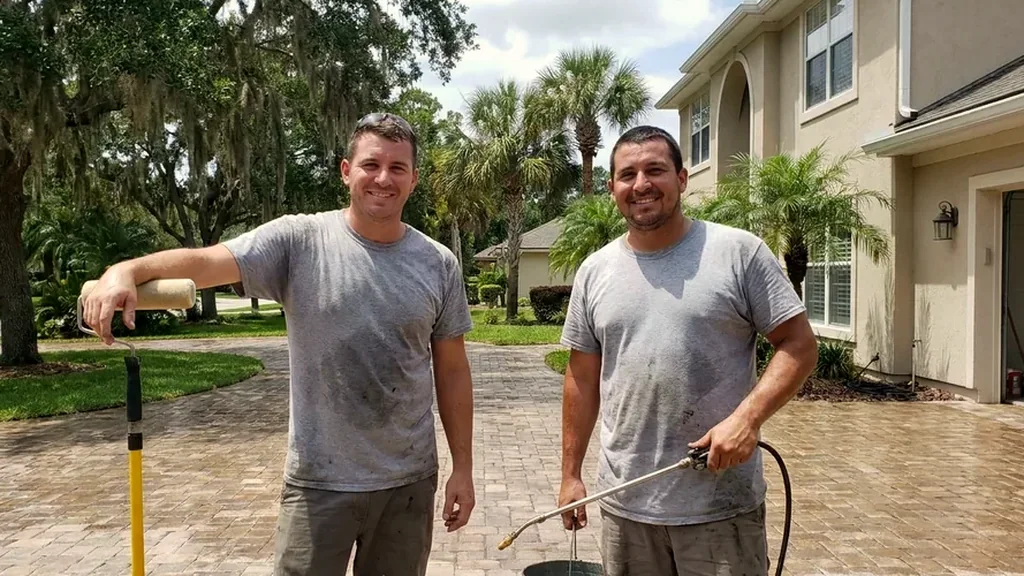
How does a paver sealing job work in Downtown St. Petersburg?
Read the space and the old coat
The contractor starts by walking your courtyard, deck or drive. The walk covers where water drains, where shade holds damp and what sealer is already down. Sunken or lifted spots are noted, since a new coat keeps any dip it covers. Tell the contractor about every owner and every paved area. Photos of the area help owners who cannot be on site, and you get a clear list of what the job covers. Notes from the walk feed straight into the written estimate. Ask the manager for any past invoices before the walk.
Remove the film and green growth
Next comes the wash. It clears the gray film, shade growth and stains that build up between tall walls. Rinse water is kept off glass doors, plants and stucco where the pavers meet the building. Gum, oil and tire marks near parking get their own attention. Stubborn spots get a second pass before the sand goes in. A broom pass at the end packs the sand so it settles. Wash water is directed away from storm drains.
Refill the joints
The wash takes joint sand with it, so the contractor sweeps new sand in before any sealer is opened. Full joints keep the pavers locked together and keep weeds from taking hold. The sand is swept in and compacted so it settles. The contractor checks that the joints are full to the same height all over the area. This wait is the step people forget, and it protects the finish. The contractor checks the height of the sand against neighboring stones.
Give it time to dry
In the rainy season the contractor watches the forecast and picks a window with dry days. A shaded courtyard may take longer to dry than a sunny drive, so the schedule bends to fit. Pavers that look dry on top can still hold water in the joints. If a shower moves in, the work waits. The last walk-through is where a board member can point to any spot for a second look.
Seal and plan the return
Last, the coat goes on in your chosen sheen, either matte or wet look. Areas are closed off while the coat sets. The contractor tells you when feet, furniture and cars can come back, so your residents know the plan. The last walk-through lets you spot anything that needs a touch-up.
Complete paver services in Downtown St. Petersburg
A downtown St. Petersburg job runs in a fixed order: wash, re-sand, dry, seal. The wash lifts the film that settles on courtyard stone and pool decks, and it pulls sand from the joints. Fresh sand goes in before any sealer. To ask how long each stage takes on your space, call (727) 591-3365.
Surfaces here are mixed. A townhome driveway takes tires, a courtyard takes feet from many households, and a pool deck takes splashes and sun. Each wears in its own way, so the contractor measures each one separately. List every paved area when you request a free estimate, even the small ones.
Sealer comes in water-based and solvent-based types, in a matte or wet look. An old solvent-based coat rules out a water-based one on top, so the old coat decides what comes next. For a historic block, matte is the quiet choice. Call (727) 591-3365 to talk through which finish fits your building.
Timing follows the sky. The rainy season runs June through September, and sealer needs a dry surface, so the contractor looks for a stretch of dry days. A courtyard shaded by a tall building may stay damp longer than an open drive. To pick a window for your property, request a free estimate.
Questions to ask before you hire
- My community has an HOA. Do you handle their approval paperwork?
- After a downpour, how many dry days do you want before you start?
- Would a wet-look or a natural-look finish suit my pavers better, and what changes between them?
- What do you do to protect my lanai furniture, my shrubs and the lawn edge?
- Will the insurance certificate you send have my name and address on it?
- Some of my pavers have a chalky film. Does that get dealt with before sealing?
- Do you walk the property with a tape or a wheel before you give me a price?
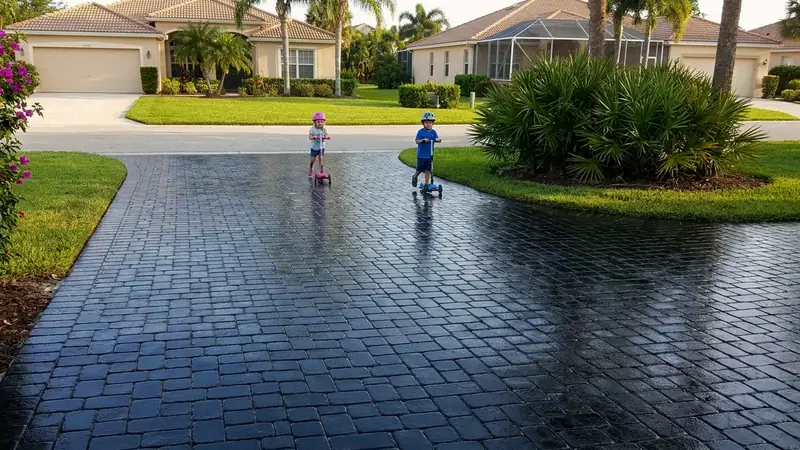
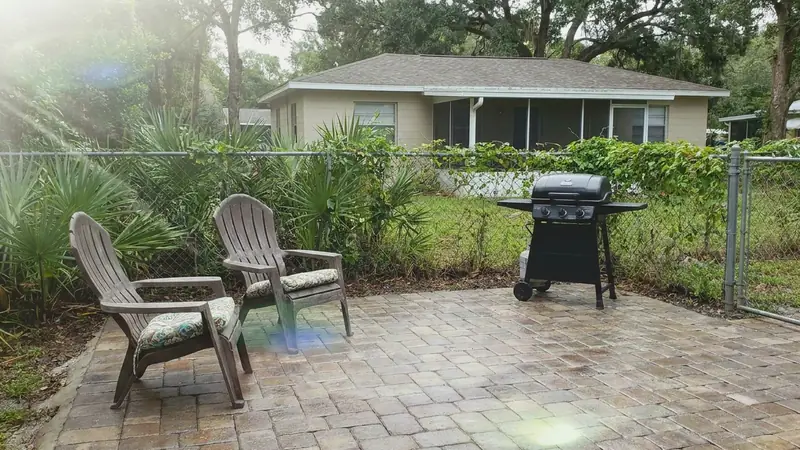
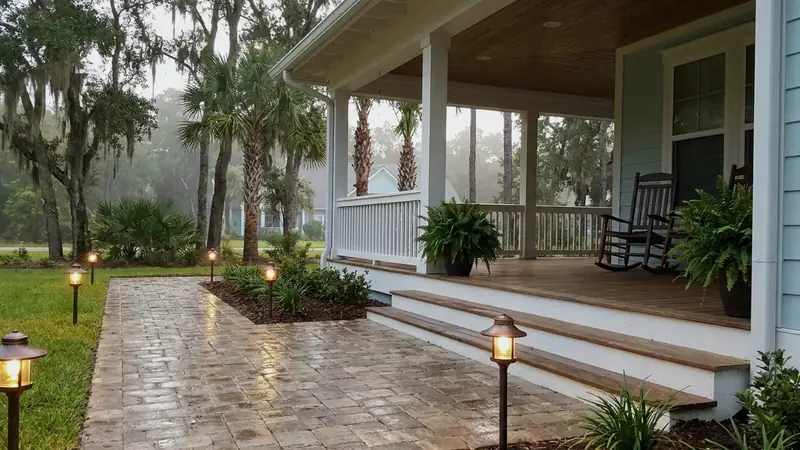
What do sealed pavers look like around Downtown St. Petersburg?
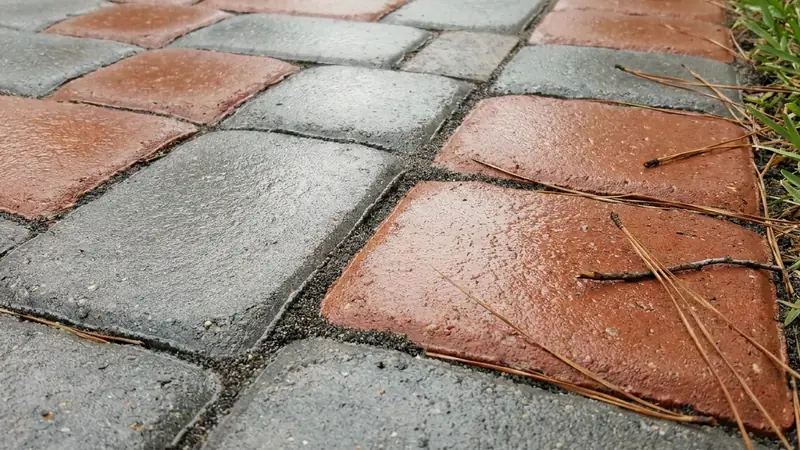
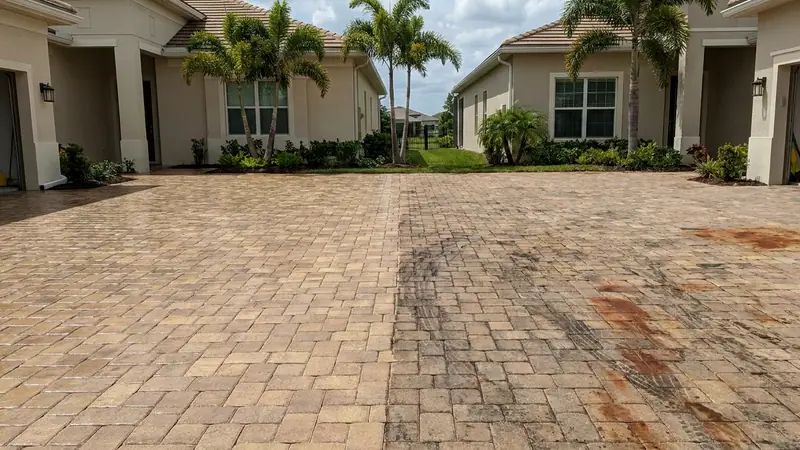
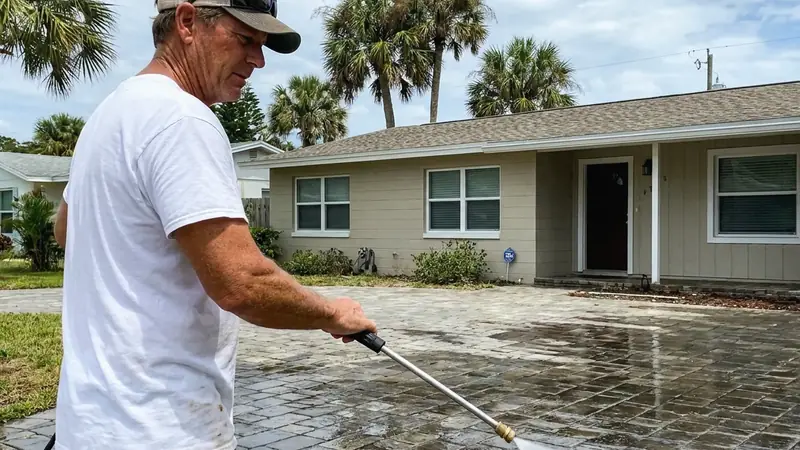
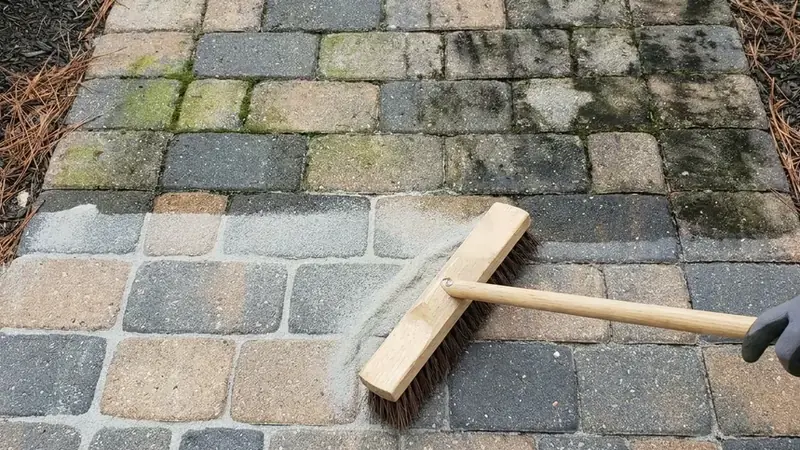
Why local matters in Downtown St. Petersburg
A contractor who works downtown knows that a pool deck may share a wall with a neighbor and a courtyard may serve forty units. That changes how the job is staged and who gets a notice. A contractor based across the bay might never think to ask. To reach a contractor who works in this part of Pinellas County, call (727) 591-3365.
Local knowledge also helps with the calendar. The rainy season runs June through September, and sealer needs a dry surface, so a good start date has to leave room for weather. A courtyard shaded by tall buildings dries on its own schedule. When you request a free estimate, ask how a start date would be set around the weather.
Older blocks add another layer. A building inside the historic district may need a word with city staff before the look of a walk or entry changes. A contractor used to downtown St. Petersburg knows to ask. If that sounds like your address, request a free estimate and mention the street, with no obligation to hire anyone.
Housing downtown is mostly shared. ZIP 33701 had 19,137 residents at the 2020 Census, about 75.67 percent of its housing is multi-family, and 60.59 percent of occupied homes are rented. That means many pavers belong to an association or a landlord instead of one owner, so a bid should be easy to hand to a board: each surface listed by area, the sealer named, the joint sand and the cleanup plan stated. Ask for those lines when you request a free estimate, and compare bids side by side without a second round of calls.
Shade from tall buildings changes what grows on a surface. Landscape Ontario says moss, lichens and algae should not grow on interlocking concrete pavers unless the area is heavily shaded, and it adds that lost joint sand widens joints and lets in the soil that feeds weeds. A courtyard between towers can be that shaded, which is why a downtown bid should say how growth is treated before any sealer goes down and how the joints are refilled. Call (727) 591-3365 and ask for both steps in writing.
Older civic buildings give downtown blocks their look. St. Peter's Episcopal Cathedral, Gothic Revival and dated 1899, faces Williams Park, and the Mirror Lake Library opened on December 1, 1915. If a building like those sits next to yours, choose a finish that suits the stonework around it, and ask about a quiet matte. Call (727) 591-3365 and say what stands beside your pavers.
Why do the city's brick streets matter to a paver owner?
Downtown St. Petersburg brick shows how long St. Petersburg has cared about stone underfoot. The city began paving streets with brick around 1903. There were once 339 miles of brick streets, and about 81 miles are left, and brick streets are protected inside historic districts. If your block still has brick, you already know the look, so request a free estimate.
The waterfront gives downtown its scale. The Pier reaches about a half mile into the bay, Straub Park runs nearly a half mile along the shore, and the park system stretches 7 miles. The Vinoy Park Hotel opened on the bayfront in 1925 in Mediterranean Revival style. If you live near the Pier, the Vinoy or Straub Park, call (727) 591-3365 and name your street.
The Downtown St. Petersburg Historic District covers 420 acres and holds 367 historic buildings, and it went on the National Register of Historic Places on April 30, 2004. It is bounded by 5th Avenue North, Beach Drive Northeast, Central Avenue and 9th Street North. If your building sits inside those lines, raise the sealer, the finish and the work hours with the contractor at the start, before anything is scheduled. When you request a free estimate, name the cross street so the answer fits your block.
Frequently Asked Questions
How often should pavers be resealed in Florida?
Expect a gap of two to five years, which is what companies commonly quote. The right gap depends on sun, rain and foot traffic, and shade can lengthen it. A contractor can check how your coat in downtown St. Petersburg is wearing at the estimate. Pavers in a shaded courtyard may sit near the short end of that range.
Is it better to spray or roll paver sealer?
Contractors use both, and the pick depends on the surface and the sealer in the can. Ask which method yours plans to use and how many coats go down. A roller or a sprayer can both give an even coat when applied with care. Either way, the surface must be dry and the joints refilled first. A roller or a sprayer works in careful hands.
Is dish soap enough to clean pavers before sealing?
Soap alone falls short of what the wash step does. The wash lifts grime, leftover residue and green growth, and it also takes sand out of the seams. That sand is replaced before sealing. Ask the contractor to describe the wash step on your estimate. A contractor can tell you which areas are ready now and which can wait.
What common mistakes should I avoid with pavers in downtown St. Petersburg?
One is putting water-based sealer over a solvent-based coat, which cannot be done. Another is sealing a damp surface, and a third is skipping new joint sand after the wash. Ask the contractor how each one is handled. A written estimate that names these steps makes comparing bids simple. Edges and any loose pavers are noted too.
How much does paver sealing cost in downtown St. Petersburg?
Published prices around Tampa Bay run $1.25 to $2.50 per square foot for cleaning, sanding and sealing. The final number follows the square footage, the state of any old coat and the sheen you pick. Larger areas sit toward the lower end, and small areas with old sealer sit higher. The estimate is free.
Can a condo board get one estimate for several areas downtown?
Yes. Ask for each area, such as the courtyard, pool deck and driveways, to be listed with its own measurements. That way every owner sees the same scope and the same price. A board can then compare the estimate against the budget for each area. Ask for the scope in writing before your next meeting.
Do homes in the downtown historic district need approval before sealing?
Possibly. The city's Certificate of Appropriateness applies to property that is designated or sits in a local historic district. The city page does not name sealing, so ask city staff about your address. A quick call before work starts can save a delay. Historic status can also affect which finish is allowed.
When can my residents walk on newly sealed pavers?
The contractor tells you when feet, cars and furniture can return, and the answer depends on the product and the weather. Sealing starts only on a dry surface, so a wet week may push back the date. Keep pets and furniture off until the contractor says it is safe.
Ready for a Free Estimate in Downtown St. Petersburg?
Call (727) 591-3365 and tell us about your pavers.
Free, no obligation